
Winter Safety Signage: How to Get Ready Before the Cold Arrives
|
Short answer: Preparing for winter means getting ahead of three
predictable risks before the season starts: reduced visibility as daylight
shrinks, slick surfaces from ice and snow, and the extra hazards that come
with plowing, salting, and foot traffic in the dark. Install or refresh slip-and-ice
warnings, keep high-visibility gear and temporary road signs staged and
ready, and clearly mark pedestrian routes and parking areas. The goal is
simple: make hazards obvious before someone finds them the hard way. |
Why does winter change your signage needs?
Two things shift at once when the season turns. First, usable daylight drops. When clocks fall back in early November, the evening commute and the end of many work shifts move into darkness, so hazards that were easy to see at 5 p.m. in October are now in the dark. Second, surfaces change. Rain becomes ice, melted snow refreezes overnight, and entryways collect slush that the morning crew walks straight into.
Signs that worked well in summer may no longer match the conditions. A parking lot that needed only directional markings in July now needs snow routes and slippery-surface warnings. A work zone that was visible in daylight now needs reflective treatment and lighting to stay visible after dark. Winter readiness is mostly about anticipating these changes and marking them before the first storm, not scrambling after it.
How do you keep work crews safer in winter?
Crews face the sharpest increase in risk because they are often outdoors, moving, and working near traffic or equipment in poor light. A few priorities carry most of the weight:
• Make workers visible. High-visibility apparel is the baseline for anyone working near moving vehicles or equipment. Keep safety vests and other personal protective equipment stocked and staged before the season, not ordered in a rush after the first snowfall.
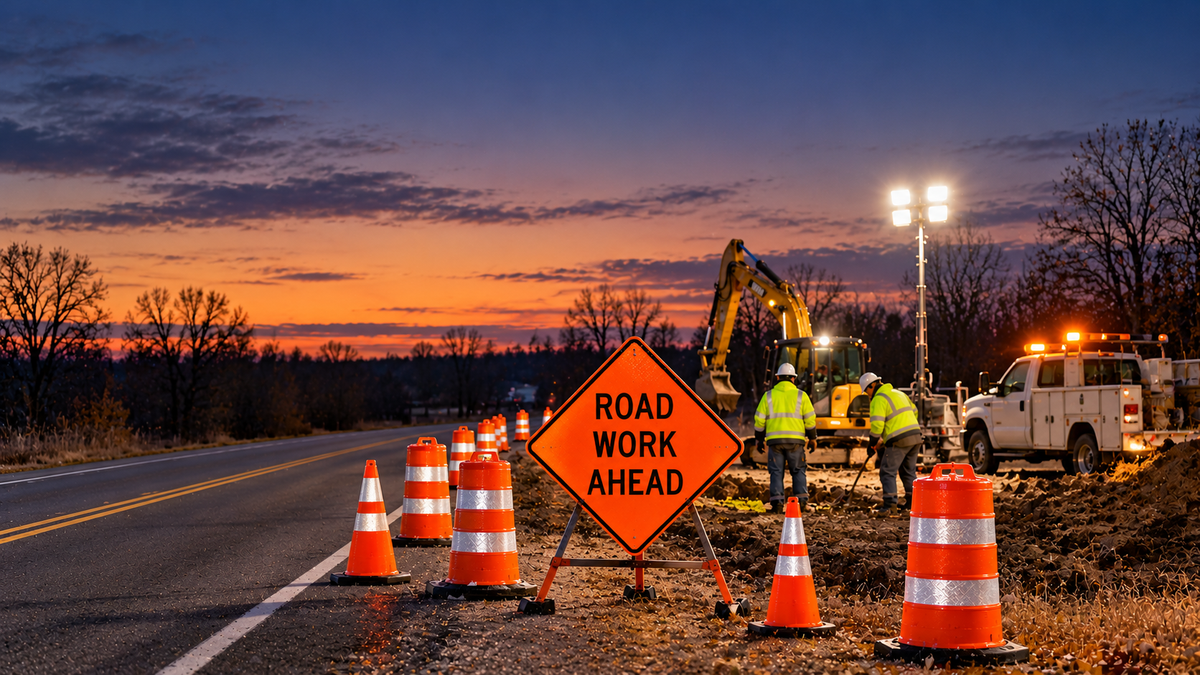
• Keep temporary road and work-zone signs ready. Winter work often means short-notice setups: a plow route, a salting operation, or a repair in freezing conditions. Having road work signs on hand lets crews mark a zone quickly instead of improvising.
• Warn about surface and overhead hazards. Icy walking surfaces, falling ice, and roof snow loads are seasonal risks that a posted warning can flag before someone is hurt.
• Plan for cold itself. Cold stress is a recognized workplace hazard. Build in warm-up breaks, dry gear, and clear signage at entry points so workers know where shelter and first aid are.
The through-line is preparation. Employees make better decisions when the hazard is marked and the right gear is already within reach.
How do you get ahead of bad weather before it arrives?
The best time to prepare is before a forecast turns serious. Weather authorities issue watches and warnings precisely so that organizations can act early, and signage is part of that response.
• Pre-plan, do not react. Keep a small inventory of winter-specific signs and cones so you can deploy them the day before a storm, not during it. Portable wet-floor cones and floor-stand warnings are quick to set out at entrances as soon as conditions change.
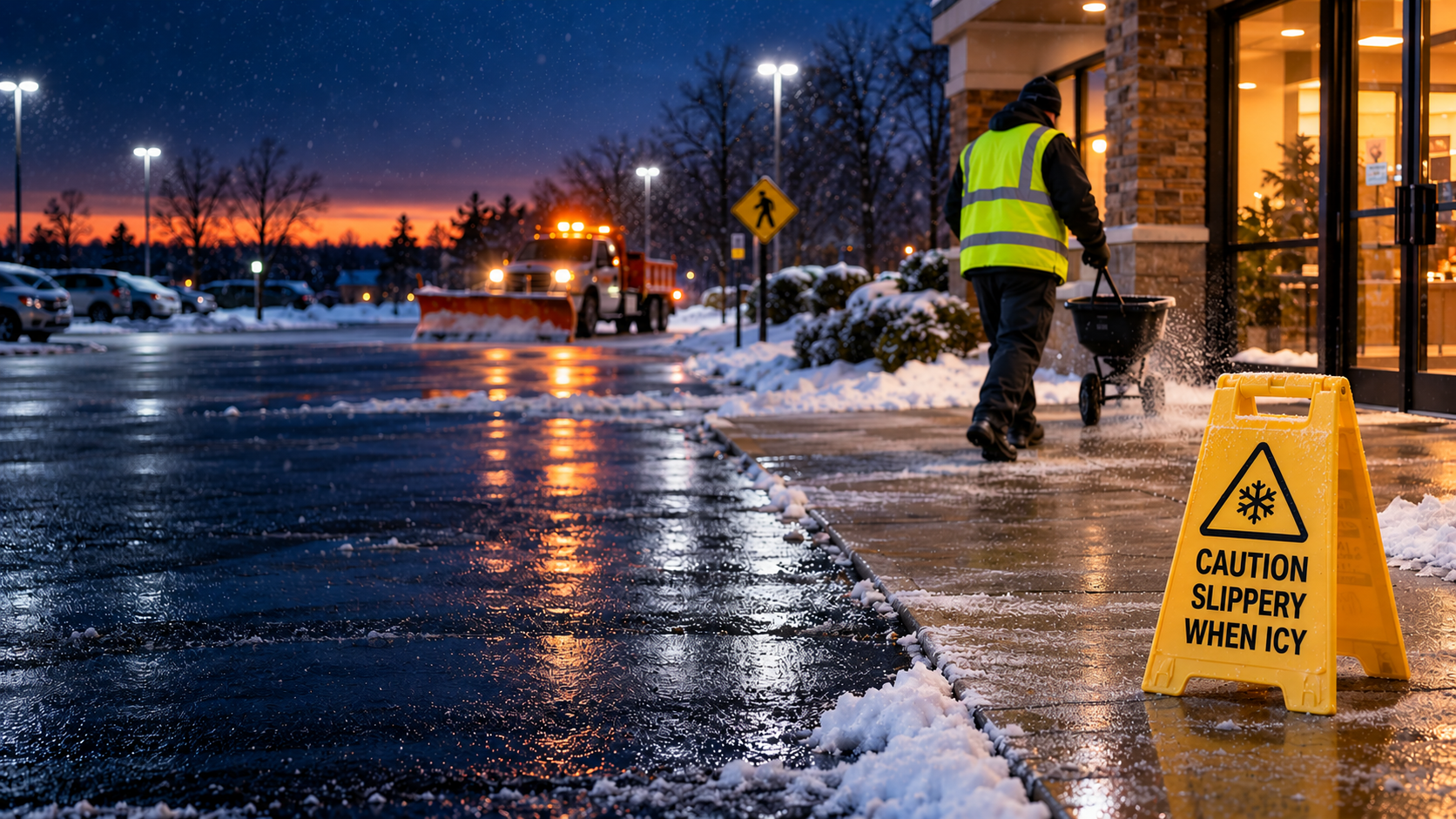
• Mark the transition points. Most winter slips happen where outside meets inside: doorways, lobbies, stairwells, and loading docks. A Caution Slippery When Wet or Icy sign at these spots sets expectations before someone steps onto a wet surface.
• Account for refreeze. A lot that was clear at noon can be glazed by the evening shift. Durable, permanent floor and surface safety signs stay in place through the season so you are not re-posting warnings every morning.
• Check what you already have. Walk the site in early fall. Faded, damaged, or missing caution signs are easy to overlook until the condition they warn about shows up.
Getting ahead of weather is less about predicting the exact storm and more about having the right warnings ready to go so a forecast triggers action instead of a scramble.
How do you keep pedestrians safe when the days get shorter?
Pedestrians are the group most affected by earlier darkness, because drivers simply cannot see them as well. Parking lots, crosswalks, and walkways all deserve a second look before winter.
• Light and mark crossings. Where people cross vehicle paths, clear pedestrian and crossing signs help drivers anticipate foot traffic that is now harder to see.
• Direct lot traffic and snow operations. Parking lot signs, including snow-route and tow-away notices, keep vehicles out of areas that need plowing and keep lanes usable after a storm.
• Separate people from plows. During and after snow removal, pedestrians and heavy equipment often share tight space. Signage that marks walking routes and keeps foot traffic clear of plowing zones reduces close calls.
• Keep walkways obvious. Snow piles can hide curbs, steps, and path edges. Warnings at these points help people on foot navigate a landscape that looks different than it did a week earlier.
Shorter days do not have to mean higher risk. Visibility is the key, and signage is one of the most direct ways to unlock it.
A simple winter-readiness signage checklist
Before the first freeze, do a walkthrough of your facilities, lots, and work areas and confirm:
• High-visibility vests and PPE are stocked and staged for every crew.
• Temporary road and work-zone signs are on hand for short-notice setups.
• Slip and ice warnings are posted at every indoor-outdoor transition point.
• Portable cones and floor-stand signs are ready to deploy ahead of a storm.
• Parking and snow-route signs are in place to keep plow lanes clear.
• Pedestrian crossings and walkways are marked for reduced visibility.
• Existing signs are checked for fading, damage, or anything now hidden by snow.
Frequently asked questions
When should we start preparing signage for winter?
Before the season changes, ideally early to mid-fall. Walking each area while conditions are still mild gives you time to replace faded signs, restock gear, and stage winter-specific warnings so you are ready when the first storm lands rather than reacting to it.
Does the end of daylight-saving time really matter for safety?
It matters because it moves more activity into darkness. When clocks fall back in early November, evening commutes and shift changes happen in lower light, which makes it harder to see pedestrians and roadside workers. Reviewing visibility, lighting, and crossing signage around that time is a practical seasonal habit.
What are the most common winter hazards signage can help with?
Slips, trips, falls on ice and snow, reduced visibility in low light, hazards around snow removal and salting, and cold exposure for outdoor workers. Clear warnings do not remove these hazards, but they make them visible so people can respond before an incident.
Do winter signs need to be reflective?
For anything seen in low light or near traffic, reflectivity helps significantly, because it keeps a sign legible after dark and in headlights. Requirements vary by application and jurisdiction, so confirm the specification that applies to your application, especially for roadway and work-zone use.
Are there regulations for winter workplace safety?
Winter conditions fall under general workplace safety obligations rather than a single seasonal rule. Federal agencies publish guidance on winter hazards, cold stress, and snow removal, and roadway work is governed by traffic-control standards. Check the authorities listed below and your state or local requirements for specifics that apply to you.
Sources
• OSHA: Winter Weather (workplace winter hazards, snow removal, cold stress)
• National Weather Service: Winter Weather Warnings, Watches and Advisories
NIOSH / CDC: Preventing Cold-related Illness, Injury, and Death Among Workers