A back-to-school guide to MUTCD sign requirements, speed limits, and visibility
School zone traffic signs in the United States are governed by the Federal Highway Administration's Manual on Uniform Traffic Control Devices (MUTCD), not by OSHA. The MUTCD sets the shape, color, and placement of school signs (including the fluorescent yellow-green color for school warning signs), and its 11th Edition became effective on January 18, 2024. Because states adopt their own conforming manuals, always confirm the specific requirements with your state department of transportation.
As students head back to class, school zones become some of the busiest and most safety-critical stretches of road a community manages. Getting the signage right is both a legal responsibility and a practical way to slow traffic and protect children. This guide explains who sets the rules, which signs a school zone needs, and how to keep them visible and compliant.
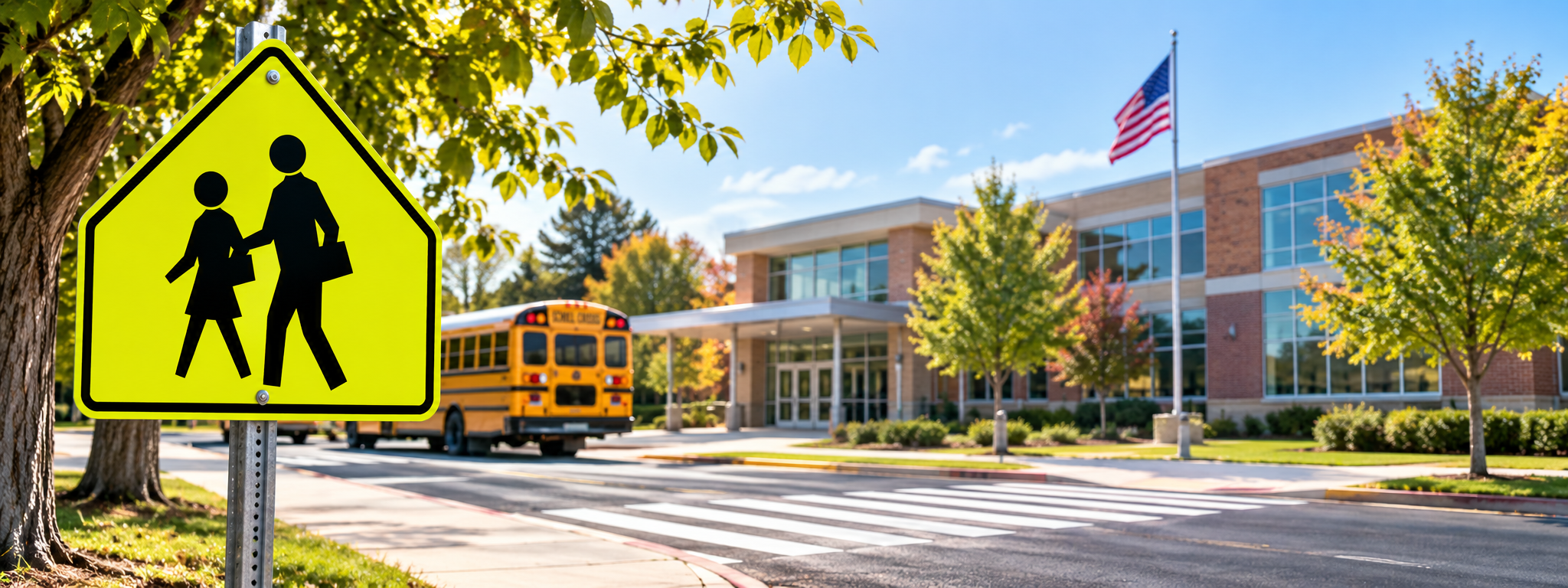
Who sets school zone signage standards?
The controlling standard is the Manual on Uniform Traffic Control Devices (MUTCD), issued by the Federal Highway Administration (FHWA). It defines every official traffic sign, including the school (“S”) series. Importantly, this is a roadway and transportation standard, not an OSHA workplace matter, so school-zone signs should be evaluated against the MUTCD and your state's version of it, rather than occupational safety rules.
What is the MUTCD 11th Edition, and does it apply to me?
The FHWA published the 11th Edition of the MUTCD through a final rule in the Federal Register on December 19, 2023, with an effective date of January 18, 2024. It is now the current national edition. However, there is no single nationwide “comply by” date: states must adopt the national manual, adopt a conforming state manual, or continue an FHWA-approved state manual, and individual provisions carry their own staggered compliance dates. Some states run their own editions. California, for example, maintains a state California MUTCD. The practical takeaway is to verify your requirements with your state DOT through FHWA's state-adoption page.
Which signs does a school zone need?
School-area signs use the MUTCD “S” series. The most common include:
- S1-1 School sign: the upward-pointing pentagon in fluorescent yellow-green that warns drivers a school area or crossing is ahead.
- S4-3P “SCHOOL” plaque: the horizontal yellow-green plaque mounted with the S1-1 pentagon.
- School Speed Limit assembly (S5-1 series): the “SCHOOL / SPEED LIMIT XX / WHEN FLASHING” sign, often with a “FINES HIGHER” supplement.
- Time or condition plaques: signs that specify when the reduced limit applies (for example, “WHEN FLASHING” or specified hours).
- End School Zone / End School Speed Limit signs, which close out the regulated area.
Note a common mix-up: the code “S4-3P” is the “SCHOOL” plaque, while the school speed limit sign is the S5-1 assembly. Confirm exact codes for your jurisdiction in the current MUTCD Part 7. Safety Sign carries MUTCD-style school zone signs, school speed limit signs, and a full school signs category, plus custom school zone signs when you need specific wording.
Why are school signs yellow-green?
The MUTCD designates fluorescent yellow-green (FYG) retroreflective sheeting as the color for school, pedestrian, and bicycle warning signs. The high-visibility color stands out from standard yellow warning signs and improves recognition in low light and bad weather. Pairing school warning signs with pedestrian and crosswalk signs and pedestrian crossing signs at crossings reinforces the message where children actually cross.
How visible and reflective do the signs need to be?
The MUTCD requires signs to be retroreflective or illuminated and directs agencies to maintain signs at or above minimum retroreflectivity levels, using sheeting that meets ASTM D4956. Specific numeric minimums vary by sign and sheeting type, so if you plan to publish exact values, pull them from the FHWA retroreflectivity resources for your sign category. In practice, this means budgeting for sign replacement as reflectivity degrades over a sign's service life, rather than waiting for a sign to become hard to read at night.
When do school speed limits apply?
Reduced school speed limits are typically enforced only during defined periods, such as posted school hours or “WHEN FLASHING” beacon times, rather than around the clock, and clear time-of-day or “when flashing” plaques are what make that limit enforceable and understandable to drivers. Placement matters too: under the 11th Edition, flashing beacons are generally positioned above, below, or beside the School Speed Limit sign rather than inside its border, so confirm the current placement and operating rules in your state's manual before installing or relocating equipment.
What else helps calm traffic around a school?
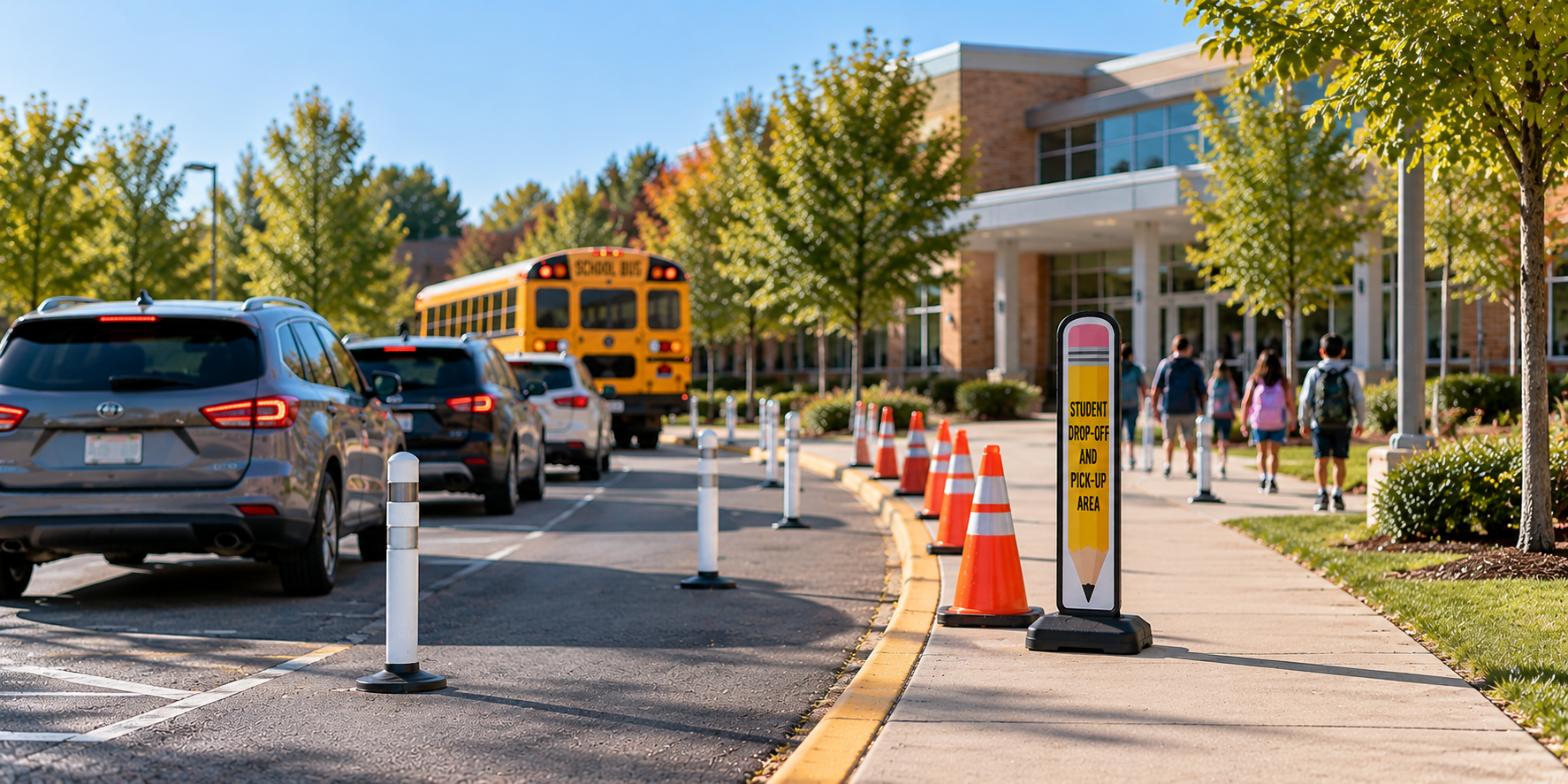
Beyond regulatory signs, schools and municipalities often add traffic-calming and pedestrian tools: stop signs at drop-off intersections, speed bump signs, children at play signs in adjacent neighborhoods, and hardware like traffic cones and delineator posts to channel vehicles during arrival and dismissal. At marked crosswalks, a rectangular rapid flashing beacon (RRFB) adds a pedestrian-activated, high-visibility flashing signal that alerts drivers to yield, and the FHWA recognizes RRFBs as a proven safety countermeasure for increasing driver yielding. School-specific systems such as Safety Sign's RRFB school crosswalk system pair the beacons with a fluorescent yellow-green school crossing sign. All of these measures pair well with programs like the FHWA's Safe Routes to School initiative, which supports engineering, education, and encouragement for students walking and biking to school.
Frequently asked questions
Is school zone signage an OSHA requirement? No. Public roadway signs, including school zones, fall under the MUTCD and your state DOT, not OSHA.
What color are school warning signs? Fluorescent yellow-green retroreflective sheeting, as designated by the MUTCD for school, pedestrian, and bicycle warning signs.
Do I have to replace all my signs because of the 11th Edition? Not all at once. Compliance is generally handled through staggered provision-specific dates and normal sign replacement. Check your state DOT for the schedule that applies to you.
Sources
FHWA: Manual on Uniform Traffic Control Devices (MUTCD)
Federal Register: MUTCD 11th Edition final rule (Dec 19, 2023)
FHWA: MUTCD state adoption status
FHWA: MUTCD Part 7 school signs (figure descriptions)
FHWA: Safe Routes to School overview
FHWA: Rectangular Rapid Flashing Beacons (RRFB), proven safety countermeasure